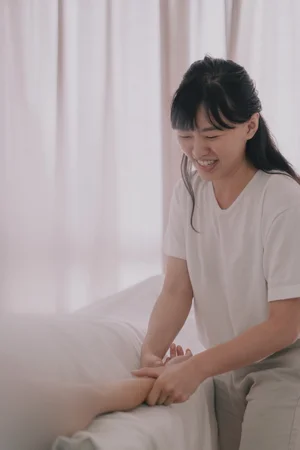
How to Reduce Face Puffiness: The Missing Piece Nobody Talks About
From cooling eye creams and jade rollers to "de-puffing" serums and sheet masks, the beauty industry has no shortage of products promising a fresher, more sculpted face. If you've ever watched a K-drama, you've probably also seen the familiar scene where someone blames their puffy face on a late-night ramyeon supper!
Most of us are already aware of the common reasons our faces might look puffier than usual. A salty meal, poor sleep, alcohol, hormonal changes or dehydration can all contribute. While these are certainly important factors, many women tell me that even when they're drinking enough water, sleeping reasonably well and trying to live a healthy lifestyle, they still wake up looking tired, heavy or puffy.
So perhaps the more interesting question isn't simply,
"Why is my face puffy?"
It's "What can I do to better care for my body so that it doesn't keep returning to the same patterns?"
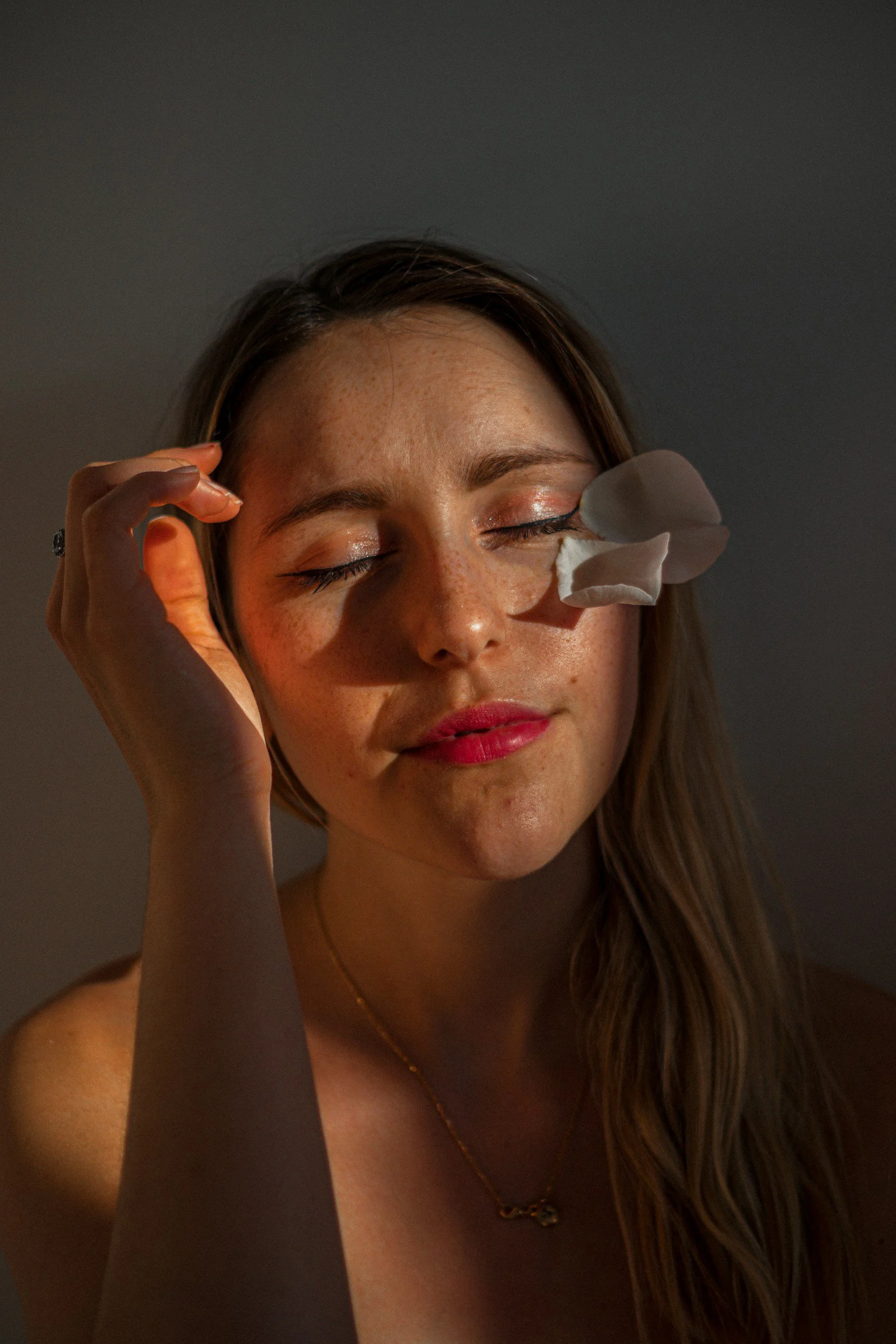
As a primary care physician and Deep Lymphatic Self-Massage instructor, I've found there's another piece of the puzzle that often gets overlooked: chronic muscle tension.
Many of us spend hours every day looking down at our phones, working at computers, clenching our jaws while concentrating, or unconsciously lifting our shoulders as we move through stressful days. Over time, these patterns become so familiar that we stop noticing them. We simply accept that a tight neck, stiff shoulders or heavy jaw are "normal."
The encouraging news is that these patterns can be changed. And when we begin working with the body as a connected whole—with movement, awareness and compassionate self-care—we often notice changes that go far beyond simply looking less puffy.
In This Article
We'll explore:
The common causes of facial puffiness
The overlooked role of muscle tension and posture
Why movement matters for healthy circulation and lymphatic flow
The connection between our emotional patterns and the way we hold tension
Why self-massage is about more than just looking better
A real story from one of my workshop participants
Gentle steps you can start taking today
What Causes Facial Puffiness?
Facial puffiness is incredibly common, and there isn't just one cause.
Many people notice puffiness after a late night, a salty meal, alcohol, hormonal changes or poor sleep. Allergies, dehydration and certain medical conditions can also contribute. These are important factors to consider, and if you experience sudden, severe or persistent swelling—especially if it's associated with pain, redness, difficulty breathing or swelling elsewhere in the body—it's important to seek medical assessment.
However, for many people, these lifestyle factors don't tell the whole story.
I've met countless women who eat well, exercise regularly and drink plenty of water, yet still feel that their face looks tired, heavy or puffy.
This is where I believe we need to look a little deeper.
The Missing Piece: Muscle Tension and Modern Life
Our faces don't exist in isolation.
The muscles of the face are connected to the scalp, neck, chest and shoulders. These areas work together every time we breathe, speak, swallow, smile or move.
Yet modern life asks a lot of these muscles.
We spend hours leaning towards screens, looking down at our phones, rushing between meetings and unconsciously holding our breath when we're stressed. Many of us clench our jaws while concentrating or carry our shoulders high throughout the day without even realising it.
Over time, these habits can leave the muscles around the face, neck and upper body feeling chronically tight.
When tissues don't move well, many people describe feeling "stuck", "heavy" or "puffy". While facial puffiness has many contributing factors, improving posture, restoring movement and gently releasing muscular tension may help some people feel lighter and notice a fresher appearance over time.
This is one of the reasons why, in my workshops, we don't just massage the face.
We also work with the scalp, neck, collarbones and chest (decolletage).
Because the face is part of a much bigger system.
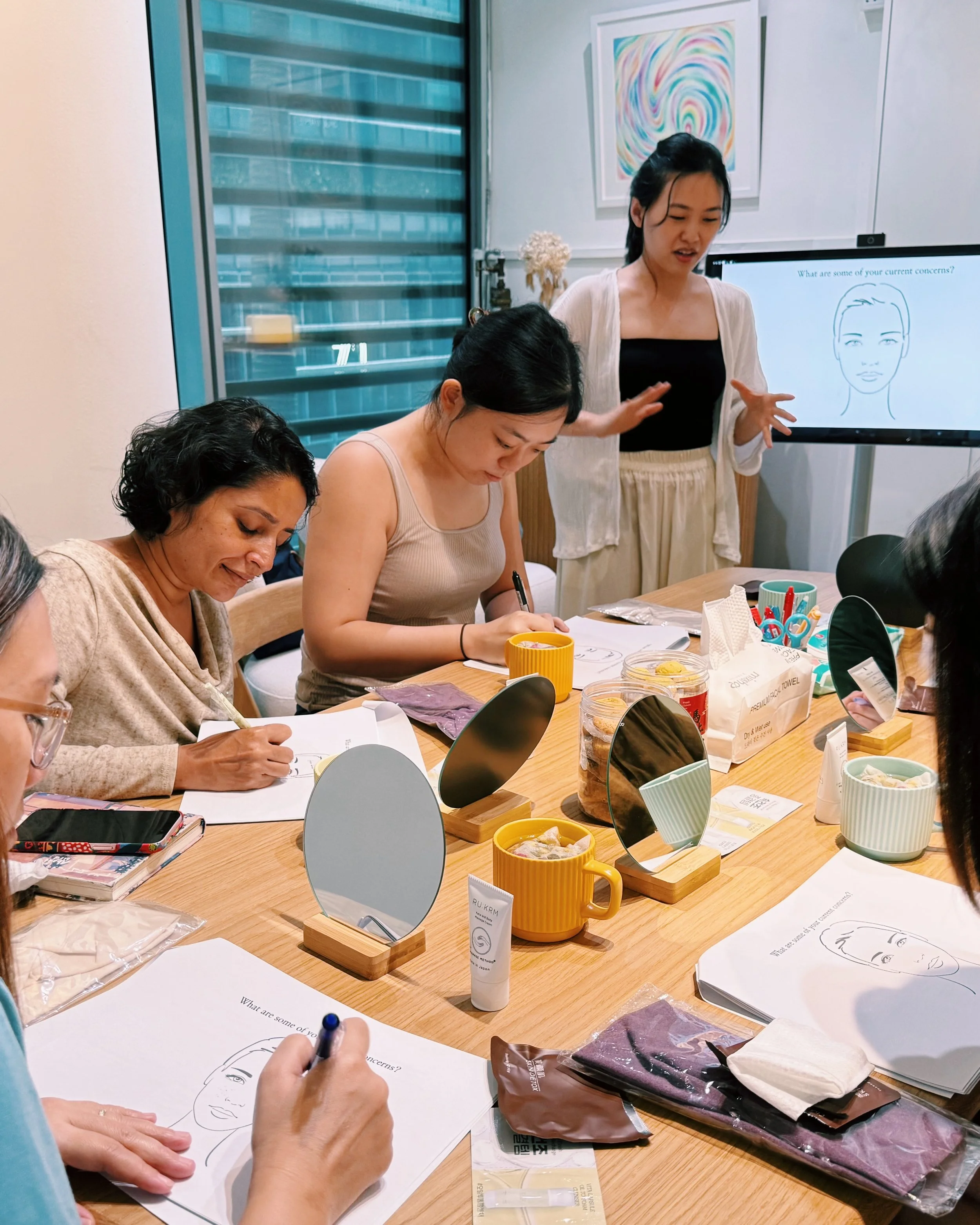
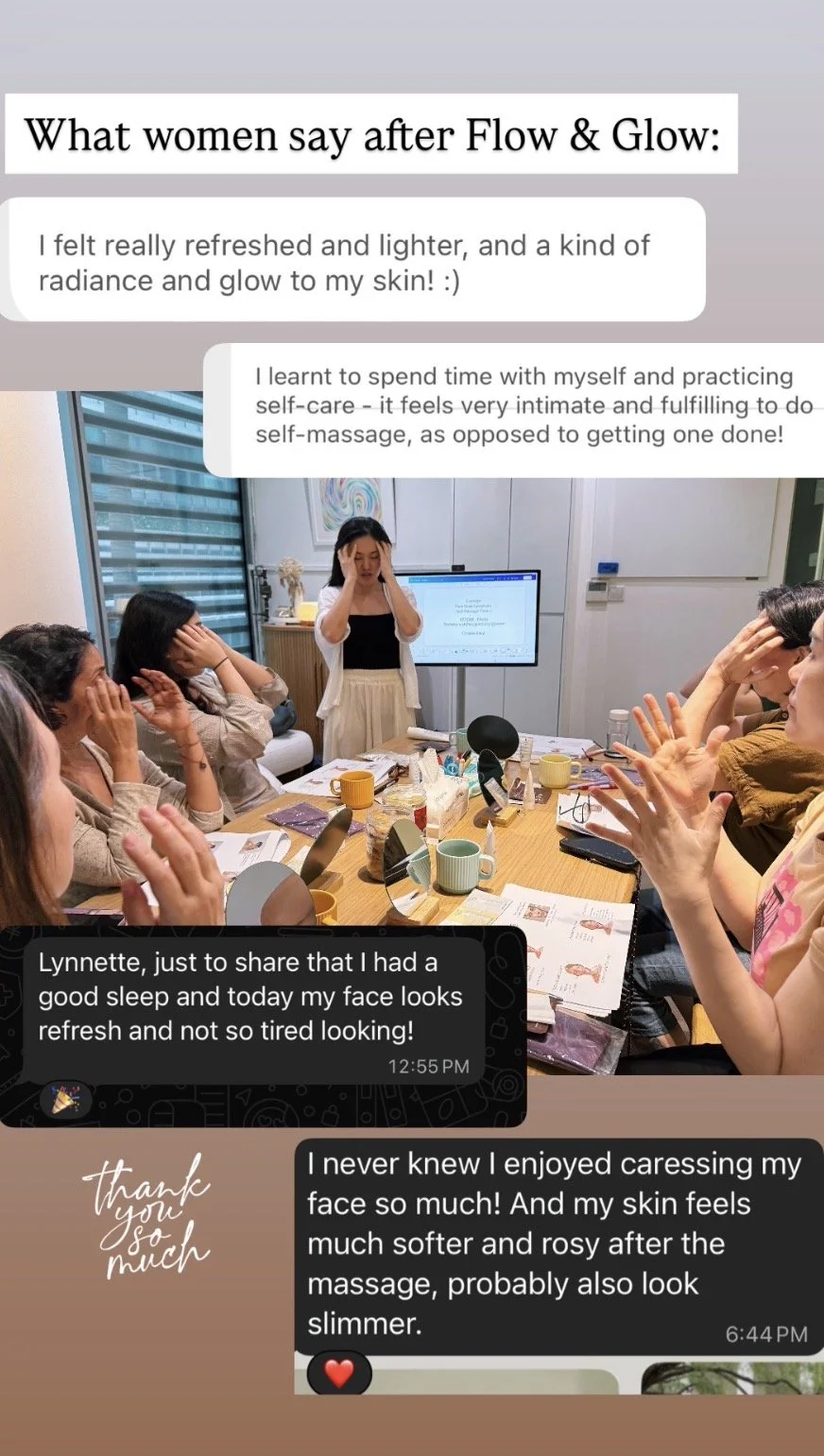
At an in-person Flow & Glow: Lilynage Deep Lymphatic Face Self-Massage Workshop in Singapore.
Why Movement Matters
One of the fascinating things about the lymphatic system is that, unlike the cardiovascular system, it doesn't have a heart pumping fluid continuously around the body.
Instead, it relies on everyday movement. Walking. Breathing. Muscle contractions. Changes in posture.
Our bodies were designed to move.
When we spend long periods sitting still, breathing shallowly or holding tension, it's no surprise that many of us begin to feel stiff, sluggish or heavy.
This is where self-massage becomes such a powerful practice.
Rather than being something you receive only once every few months, it becomes a gentle daily ritual that helps you reconnect with your body. Combined with movement and awareness, self-massage can help release accumulated tension and support healthy circulation and lymphatic flow.
Many participants tell me that after just a few minutes of practice, they don't simply look more refreshed—they feel lighter, breathe more deeply and become more aware of how much tension they had been carrying.

No better tool than our own two hands when it comes to self-massage.
Looking Beyond the Physical: The Mind–Body Connection
Now this is the part I believe we don't talk about enough.
Our muscles don't only respond to posture or exercise.
They also respond to the way we move through life.
Perhaps you're someone who pushes through fatigue because there's still more to do.
Maybe you find it difficult to rest without feeling guilty.
Perhaps you've spent years believing your productivity determines your worth, or that you always need to be strong for everyone else.
These patterns often begin long before we're aware of them.
Without realising it, we may start holding our breath while working, clenching our jaw during stressful conversations, or carrying our shoulders high throughout the day.
Over time, these become our "normal."
This is why I don't see self-massage as simply a beauty routine or a physical technique.
I see it as a conversation with your body.
Each session becomes an opportunity to slow down and ask:
Where am I holding tension today?
What has my body been carrying for me?
Sometimes the greatest transformation isn't simply softer muscles.
It's learning to meet yourself with compassion instead of constantly asking your body to keep pushing.
A Story That Stayed With Me
One of the women who attended my Flow & Glow Face Self-Massage Workshop was in her forties.
She had always believed her puffy eyelids were simply genetic.
"I just thought this was how my eyes looked."
After learning the techniques and practising consistently, she began noticing subtle changes.
Her eyelids looked less heavy.
Her eyes appeared more open.
Friends commented that she looked brighter and more awake.
But what touched me most wasn't the physical transformation.
She told me that she felt she was showing up differently in her life.
More present. More alert. Feeling better about herself.
That, to me, is what this work is really about.
It's not about chasing impossible beauty standards or looking ten years younger (because I believe in cultivating beauty wherever you are at and whatever season of life you are in!).
It's about feeling comfortable in your own body and showing up in the world with greater energy, confidence and presence.
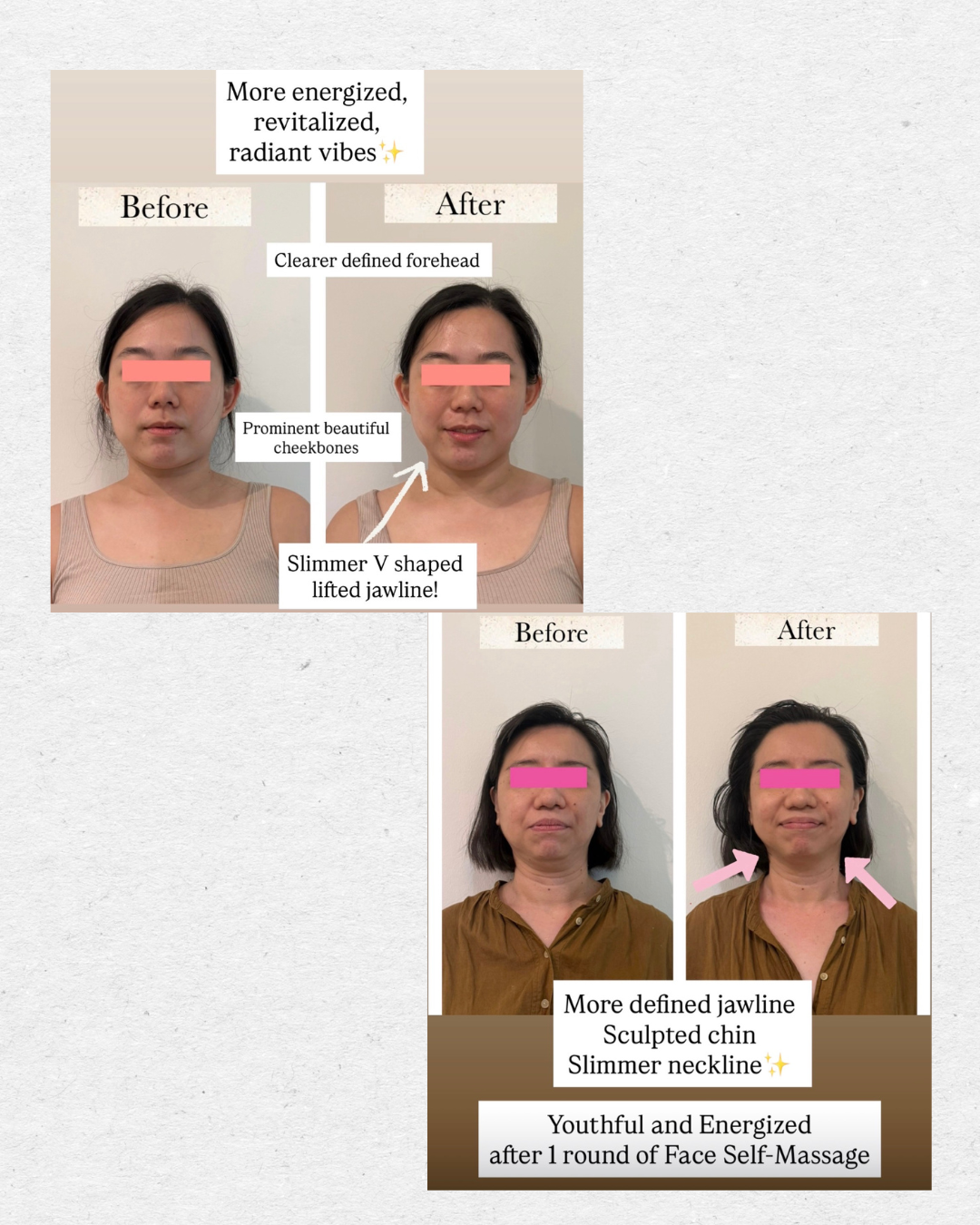
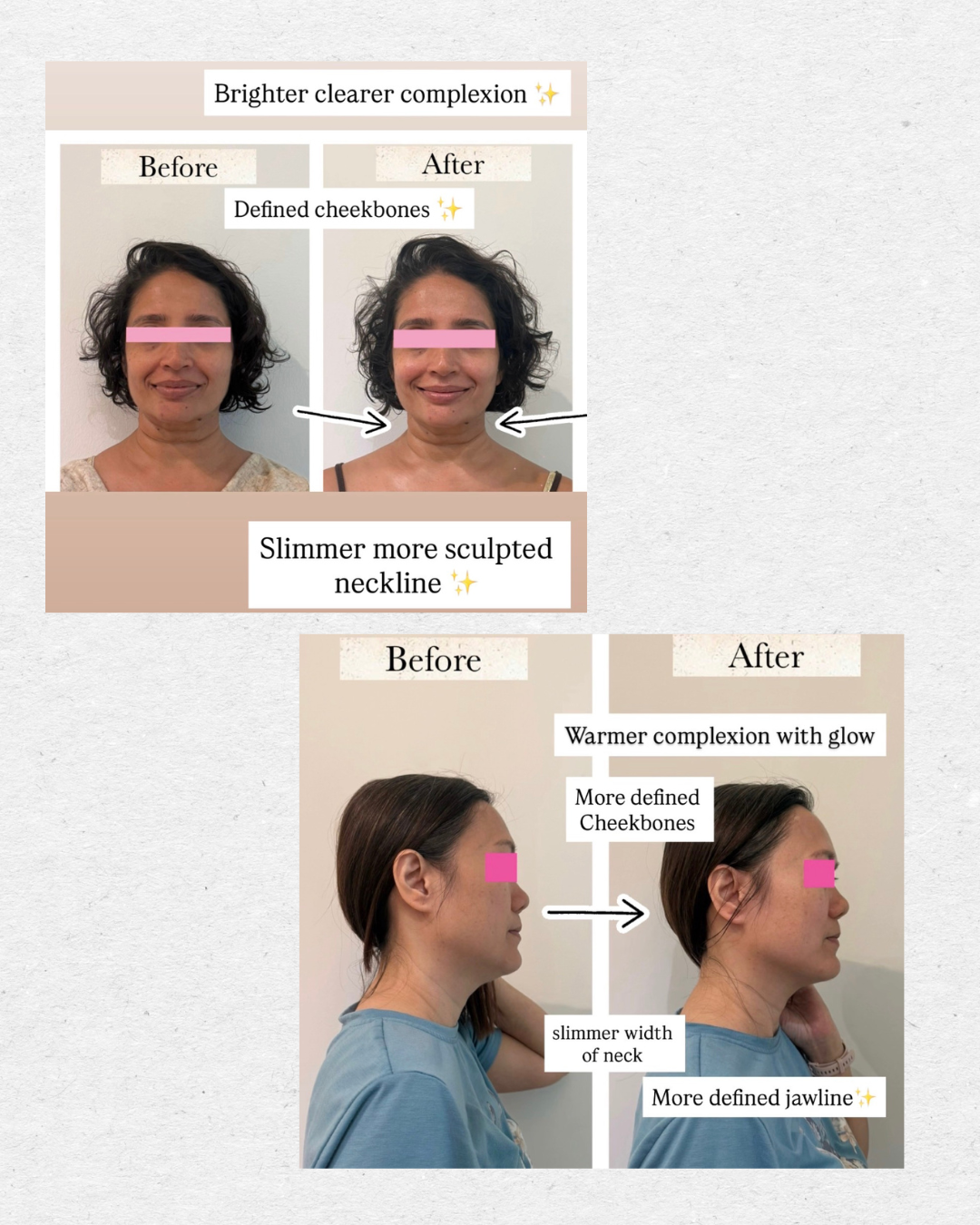
Some beautiful changes after 1 round of the Lilynage Face Deep Lymphatic Self-Massage.
Five Gentle Ways to Support a Less Puffy Face
While there's no single solution that works for everyone, here are a few gentle practices that can make a meaningful difference over time.
1. Notice your posture.
Your face is connected to your neck, shoulders and chest. Becoming aware of how you sit and stand throughout the day is often the first step. If you notice yourself slumped over and slouched for a long period of time, take a moment to get up, stretch, do simple neck rotations and arm stretches. Take short movement breaks, stretch your neck and shoulders, and avoid staying in one position for hours at a time.
2. Hydrate hydrate hydrate.
Lymph needs water in order to flow more effectively. We often spend much of our working hours gulping down a variety of teas and coffees which dehydrate the body and cause lymph to flow less smoothly. Drinking plain water is ideal for our lymphatic health.
3. Learn gentle self-massage.
Releasing tension around the scalp, face, neck and collarbones can become a simple daily ritual that supports your overall wellbeing.
4. Breathe more deeply.
Our breathing influences how our bodies move. Slow, relaxed breathing encourages greater movement throughout the chest and diaphragm.
5. Become curious about your patterns.
Notice when you clench your jaw, lift your shoulders or hold your breath. Awareness often comes before lasting change.
Why My Approach Is Different
Many people come to my workshops expecting to learn massage techniques.
What they often don't expect is how much they learn about themselves.
Through the Japanese Lilynage method of Deep Lymphatic Self-Massage and my coaching approach, we don't simply focus on reducing puffiness.
We explore posture, movement, breathing and body awareness. We begin recognising where tension accumulates and gently uncover the habits—both physical and emotional—that may be contributing to it.
Instead of fighting your body, you begin working with it and understanding it.
Ready to Experience It for Yourself?
If you've been struggling with facial puffiness, heavy eyelids, jaw tension or a face that always seems to look tired, I'd love to invite you to join my Flow & Glow Face Self-Massage Workshop.
In this intimate workshop, you'll learn gentle Lilynage Deep Lymphatic Self-Massage techniques that help release tension through the face, scalp, neck and upper body while supporting healthy circulation and lymphatic flow.
More importantly, you'll leave with practical skills you can continue using at home.
Because true self-care isn't about relying on occasional treatments.
It's about learning how to care for yourself every day—with greater awareness, kindness and confidence.
Frequently Asked Questions
Can self-massage help reduce facial puffiness?
Facial puffiness has many possible causes, and results vary from person to person. Gentle self-massage may help some people feel less puffy by encouraging movement, releasing muscular tension and supporting healthy circulation and lymphatic flow as part of an overall self-care routine.
Why are my eyes puffier in the morning?
Fluid naturally redistributes while we sleep, which is one reason the eyelids can appear puffier on waking. Sleep quality, allergies, hormones, salt intake and muscle tension may also contribute.
How long does it take to notice a difference?
Everyone is different. Some people notice that they feel lighter or more relaxed after a single session, while visible changes usually develop through regular, consistent practice over time. With the Lilynage method of Deep Lymphatic Self-Massage, beautiful changes are often seen just after 1 round of self-massage.
When should I see a doctor?
If facial swelling is sudden, severe, painful, affects only one side, is associated with redness, fever, difficulty breathing or swelling elsewhere in the body, or persists without an obvious explanation, it's important to seek medical assessment.
Before you leave, take a moment to notice your face and neck.
Are you holding your jaw tightly?
Are your shoulders lifted?
What would soften if you simply allowed yourself a gentle touch with your palms and acknowledged all the hard work you’ve been doing?
Would love to hear your thoughts! Leave a comment below.